War in Iran: The Unfolding Conflict and the Peril of Getting Bogged Down
The strategic landscape of the Middle East has been irrevocably altered following the commencement of a concerted military offensive by the United States and Israel against Iran. This operation marks a significant escalation from previous, more limited engagements, targeting the very heart of the Islamic Republic's power structure and military capabilities. As the dust settles from the initial waves of strikes, a critical question looms large for policymakers and military strategists alike: how deeply will the US and Israel become entrenched in this burgeoning conflict, particularly in the volatile Iran Persian Gulf region?
The Initial Assault: Targets, Strategy, and Objectives
The joint US-Israeli offensive has been characterized by its broad scope and strategic precision. Initial reports confirm that the strikes have targeted a wide array of high-value objectives, signaling a multi-pronged approach designed to cripple Iran's ability to wage war and to destabilize its regime. Among the primary targets are:
- Top Leadership: Efforts to neutralize Iran's supreme leaders and key military commanders are paramount. While initial reports indicated that President Raisi and Supreme Leader Khamenei had reportedly survived and sought secure shelters, the intent to decapitate the regime is clear.
- Air Defense Systems: Recognizing the importance of air superiority, a major focus has been the degradation of Iran's air defense network. While Iran's air defenses had reportedly suffered setbacks in previous engagements, the extent of their current vulnerability and the potential for resourceful command to compensate for technological shortcomings remain critical factors.
- Missile Capabilities: Iran's extensive ballistic missile arsenal poses a significant threat to regional stability. Strikes have aimed at missile storage facilities, launch sites, and production centers, though it's understood that a single wave cannot eliminate this deep-seated capability.
- Symbolic and Infrastructural Targets: Beyond military hardware, the offensive has deliberately struck at symbols of state power, including intelligence headquarters, the Ministry of Defense, the Supreme Court, and the Atomic Energy Organization. Cyberattacks have simultaneously targeted official information resources, adding a layer of digital disruption.
- Urban Centers: Bombings have extended beyond the capital, Tehran, to encompass at least a dozen major provincial cities such as Qom, Tabriz, Bushehr, and Isfahan. This broad targeting reflects an intent to apply widespread pressure and potentially incite internal dissent.
The overarching strategic objectives of the US, as articulated by former President Trump's statement – "We will ensure that Iran does not obtain nuclear weapons. This is a very simple message: they will never have nuclear weapons" – underscore two critical realities: that previous, more limited strikes failed to halt Iran's nuclear ambitions, and that Iran has continued its work on an atomic bomb despite international pressure. The primary goal is clearly the liquidation of the Islamic Republic regime, with the elimination of its nuclear potential serving as a crucial secondary objective. Experts speculate about the potential for innovative tactics, perhaps involving special forces or cutting-edge technologies, suggesting a departure from conventional approaches.
Iran's Retaliation and the Quest for a "Prestige Goal"
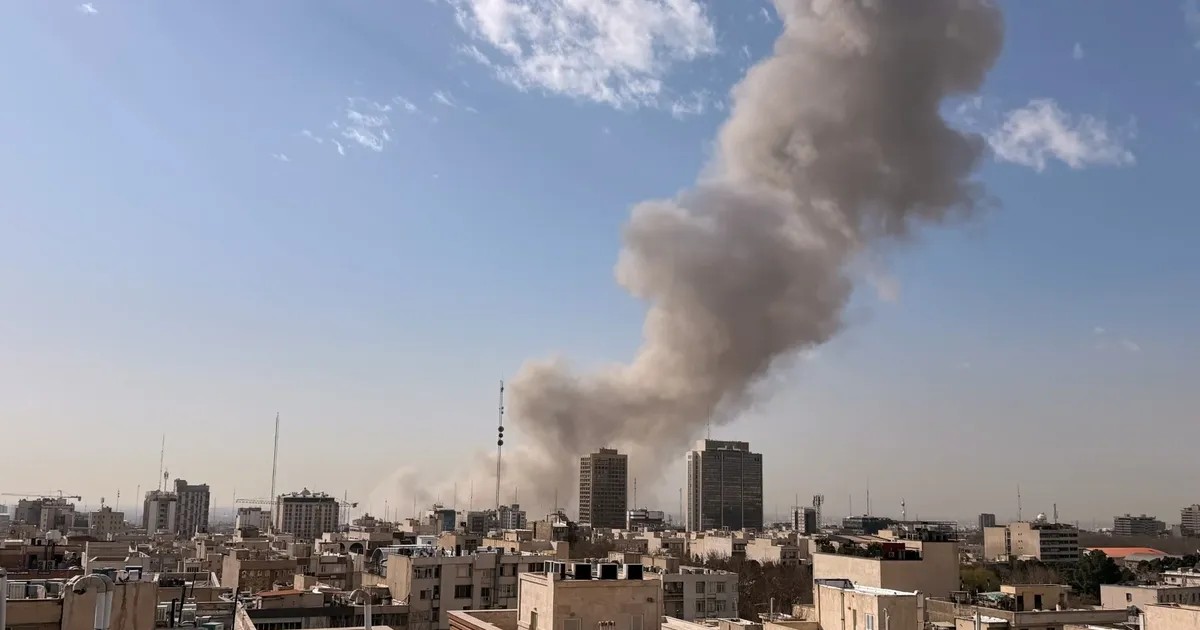
True to form, Iran's response was swift and expected. Missile attacks were launched against targets in Israel and US military bases situated in the United Arab Emirates and Bahrain. While a significant majority of these projectiles were reportedly intercepted by advanced air defense systems, videos circulating on social media showing smoke plumes from impact sites indicate that some managed to penetrate. This serves as a stark reminder of the limitations of even the most sophisticated defense systems against saturation attacks.
A key indicator of Iran's success, or lack thereof, in the eyes of its populace and military, is the ability to achieve a "prestige goal" – specifically, shooting down a US or Israeli aircraft. Memories of past conflicts, where similar claims proved to be unfounded, highlight the immense psychological impact such an achievement would have on Iranian morale and the resilience of its society. A failure to land such a blow could severely undermine public support and the fighting spirit of the Iranian armed forces.
The immediate aftermath of the initial strikes also brought conflicting reports regarding the status of Iran's leadership. While some early sources, like a fleeting headline, claimed the death of Supreme Leader Khamenei, more detailed accounts from the operational phase suggest that the leadership managed to evade the initial waves of attacks, finding refuge in secure locations. This survival implies a more protracted struggle, as the regime retains its command and control structure, enabling a more organized and sustained retaliation.
The "Bogged Down" Dilemma: Air Power vs. Ground Operations in the Persian Gulf
The central question echoing through strategic circles is the potential for the US and Israel to become "bogged down" in a prolonged conflict. Despite a massive US military buildup in the vicinity of Iran Persian Gulf and diplomatic overtures, the current operation remains primarily an aerial campaign. While former President Trump had expressed a desire for a "short operation," history offers cautionary tales about the transition from air superiority to decisive victory without ground forces.
Military experts widely express skepticism about the feasibility of achieving the stated objectives – regime change and nuclear disarmament – solely through aerial bombardment. Iran's vast territorial expanse, mountainous terrain, deeply entrenched ideology, and a large, albeit diverse, population present formidable challenges to any externally imposed regime change. A ground invasion, while potentially decisive, carries immense risks:
- Logistical Nightmare: Sustaining a large ground force in Iranian territory would be an unprecedented logistical challenge, far surpassing previous deployments in Iraq or Afghanistan.
- Guerrilla Warfare: Iran has a history of supporting proxy groups and is well-equipped for asymmetric warfare, potentially turning any occupation into a prolonged, costly insurgency.
- Regional Instability: A full-scale ground war could ignite the entire Middle East, drawing in other regional and global powers and jeopardizing the critical shipping lanes of the Persian Gulf.
- Humanitarian Crisis: The scale of civilian casualties and displacement would be catastrophic, leading to immense international pressure and moral dilemmas.
While an air campaign can degrade military assets and infrastructure, it often struggles to dismantle deeply rooted political systems or to locate and destroy dispersed nuclear program components definitively. The decision to commit ground troops would be a monumental one, carrying profound implications for US foreign policy and global stability.
Emerging Tactics and Future Battlegrounds
The current conflict also highlights the evolving nature of modern warfare. Beyond traditional air-launched munitions, cyberattacks are playing a crucial role in disrupting Iranian information networks and government functions. Looking ahead, analysts anticipate a renewed focus on Iran's naval capabilities, particularly its conventional fleet and asymmetrical naval assets in the Iran Persian Gulf.
The Iranian navy, often considered the weakest and least protected arm of its defense, could become a highly visible and media-effective target. The deployment of advanced technologies like the US Scorpion Strike operational group, equipped with LUCAS kamikaze drones (akin to Russia's "Geran-2"), signifies a shift towards highly adaptable and cost-effective precision strikes. These drones could pose a significant threat to Iran's patrol boats, coastal defenses, and even larger naval vessels, potentially delivering a swift and visually impactful blow. However, Iran's own use of similar drone technology and fast attack craft in the constricted waters of the Persian Gulf could present unforeseen challenges.
The survival of the Iranian leadership after the initial wave of attacks sets the stage for a critical experiment. The world watches to see what lessons Iranian leaders, military analysts, and command structures have learned from previous campaigns. Equally important is how the US and Israel intend to resolve their core strategic objectives without resorting to the potentially devastating commitment of ground forces, a scenario fraught with the danger of a prolonged and costly entanglement.
Conclusion
The conflict in Iran is a high-stakes gamble with far-reaching consequences for regional stability and global geopolitics. While the initial strikes demonstrate overwhelming military superiority, the fundamental challenge remains whether air power alone can achieve the ambitious goals of regime change and nuclear disarmament without igniting a ground war that could mire the US and Israel in a protracted and costly conflict in the Iran Persian Gulf region. The coming weeks will be critical in determining whether this operation can truly be a "short one" or if it will evolve into a deeper, more complex entanglement, testing the resolve and resources of all parties involved.
For further insights into the strategic underpinnings of the conflict, read US-Israel Strikes on Iran: Goals of Regime Change & Nuclear Control. To understand Iran's counter-measures and their effectiveness, explore Iran's Retaliation: Attacks on US Bases in UAE & Israel.